Common Language, Different Worlds

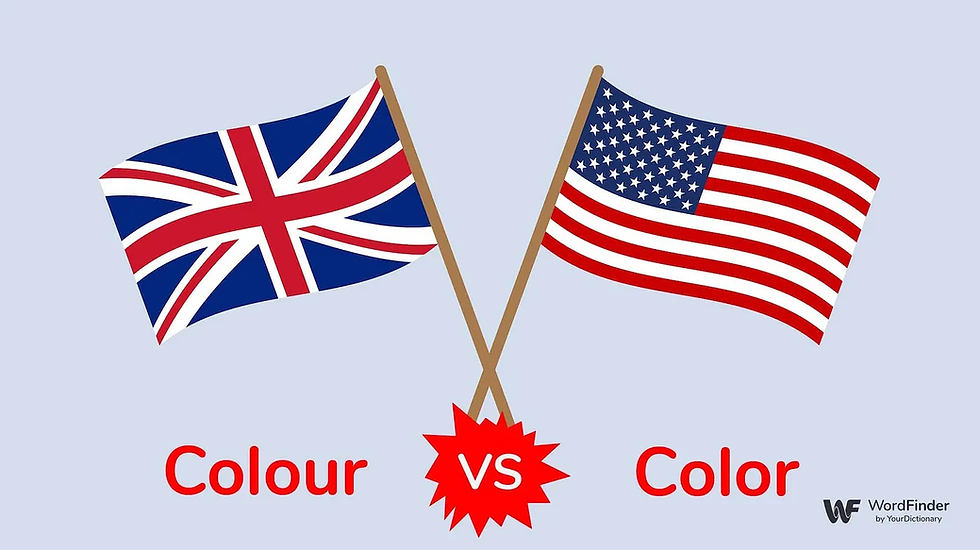
“England and America are two nations divided by a common language.” — George Bernard Shaw.
With the current state of the world, it is uncertain what fate holds for us. Numerous countries have recently entered wars in the last decade. Millions have been displaced, and governments are practically impotent in attempts to salvage the remains of their homeland. In the face of such overwhelming instability, the human mind often retreats to smaller, more manageable battlegrounds. We find solace in the debates we can actually win. Thus, even as the geopolitical landscape shifts, one thing remains certain: the true nature of this quote will always apply to us.
Why do we care so much if someone says “maths” instead of “math”? Why does a TikTok comment section turn into a war zone because a British creator typed “erm” instead of “um”? It’s because language is our most personal border. When the world feels out of control, we cling to the way we talk to prove who we are.
Let’s look at the most famous “filler” word. If you’re American, you probably use “um” or “uh.” If you’re British, you likely use “erm.” To a casual observer, this looks like a random spelling choice, but it’s actually rooted in sociolinguistics.
In the UK, most people speak with what linguists call non-rhoticity. This is a fancy way of saying they don’t pronounce the “r” sound at the end of syllables. When a British person says “erm,” they aren’t actually pronouncing the “r.” The “r” is just a signal to hold the vowel sound longer, making it sound like “uhhh.”
According to Dr. Geoff Lindsey, a linguistics expert, these “hesitation sounds” are programmed into us from birth. We use them to hold our place in a conversation so no one interrupts us while we think. Because “erm” and “um” feel so natural, seeing the “wrong” one feels like someone is invading our space. It’s a “manageable battleground” where we can say, “You’re doing it wrong,” even when we can’t solve the bigger problems of the world.
Why do we get so defensive about these small things? Psychology tells us that during times of high stress — like the global instability mentioned in our intro — the brain looks for in-groups and out-groups. When we hear someone use our specific slang, our brain releases a little hit of oxytocin (the “bonding” chemical). When we hear the “other” version, our amygdala (the brain’s fear and judgment center) might spike just a tiny bit. This is the same part of the brain involved in substance use struggles; it craves familiarity and “rewards” us for sticking to what we know.
We can’t talk about this divide without mentioning Noah Webster. In the 1800s, Webster decided that American English should be different from British English as a point of pride. He published the American Dictionary of the English Language and purposefully changed words. He took the “u” out of colour and flavour and changed theatre to theater.
Webster’s goal was “linguistic independence.” He knew that if you change the way a person writes, you change the way they think. This created a permanent rift. Even today, Americans tend to value “efficiency” in language (shorter words, direct meaning), while the British often value “tradition” (keeping the old French or Latin spellings). These aren’t just spelling choices; they are reflections of our national personalities.
Interestingly, the way we use language changes when we are under pressure. Research into Mental Health and Substance Use shows that when people are struggling or stressed, their language often becomes more “binary”, meaning they see things as all-or-nothing, us-vs-them.
If you notice a friend suddenly getting hyper-aggressive about small things (like how someone talks) or withdrawing from their usual social groups, it might be a sign of a deeper struggle. The “manageable battleground” of language can sometimes become a hiding place for people who are overwhelmed by real-life trauma or mental health challenges.
Today, we have a new factor: the Internet. High schoolers in the UK are watching American YouTubers and starting to say “y’all,” while American teens are watching Love Island and saying “it’s a bit of me.”
A study from the University of Cambridge found that regional dialects are actually disappearing in favor of a “Standard Internet English.” While this makes it easier to talk to people across the world, it also makes some people fight harder to keep their original identity. The more we all start to sound the same, the more we fight to keep those tiny differences like “erm” alive. We don’t want to lose our “homeland,” even if that homeland is just a specific way of speaking.
At the end of the day, Shaw was right. We are divided by our language, but that division is what makes our cultures interesting. The rivalry between the US and the UK gives us a sense of belonging in a world that feels increasingly chaotic and displaced.
We might not be able to stop every war or fix every government, but we can choose how we treat each other in the “smaller battlegrounds.” Whether you use “erm” or “um,” “color” or “colour,” the fact that we are still talking and still arguing means we haven’t given up on our identity yet.
So, go ahead and defend your “u.” Argue about the “r” in “erm.” Just remember that behind every word is a human mind trying to find a little bit of home in a world that’s constantly changing.


Comments